



Global Chemical Sourcing Has Changed. Your Planning Calendar Should Too.
Earlier this year, we were seeing 6 to 8 week lead times on many overseas raw materials. Today, we're telling customers 10 to 12 weeks is safer. On some materials, we're advising 16 to 18 weeks.
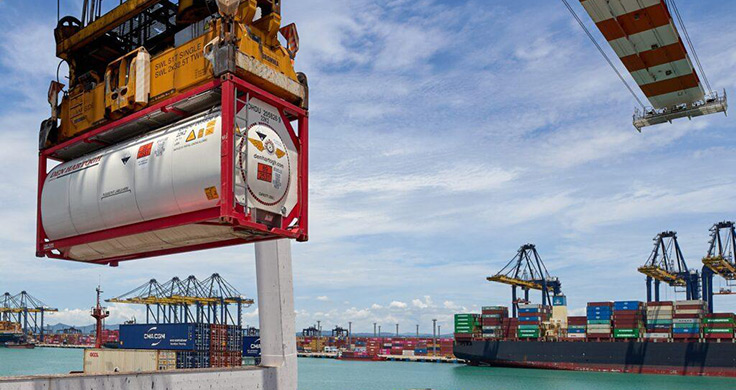
What's happening with ocean freight
Since the Strait of Hormuz closed in late February, ocean freight has moved sharply. Far East to East Coast rates hit $10,910/container, up 305% and approaching the 2022 pandemic peak. West Coast is up 289%.
Reliability has moved in the wrong direction too. Global on-time departures were 29.4% in August. On-time arrivals were 56.4% in July, with late ships averaging six days behind. At Shanghai and Ningbo, on-time rates fell as low as 21 to 33%.
A 12-week lead time doesn't leave much room for error
Production, QA, container space, port congestion, customs, tariffs and trucking all have to line up. One delay can move the delivery date. Stack two or three together, and you're firefighting.
Cheap isn't cheap when it's late
The lowest-price drum that shows up three weeks late can cost considerably more in premium freight, stalled lines and missed commitments to your own customers.
This is where Silver Fern earns its keep
We don't just quote lead times. We manage the risk behind them. Sourcing, ocean freight, customs, duties, tariffs, backup supply and inventory positioning are all part of the job. We handle the parts that shouldn't be your problem, and we flag issues before they become production emergencies.
Give us a forecast, and we'll work the supply chain on your behalf, securing inventory, qualifying backup sources and protecting your line before you're staring down a stockout.
Global sourcing still provides access and cost advantages. But the lead times you used in January may not work today.